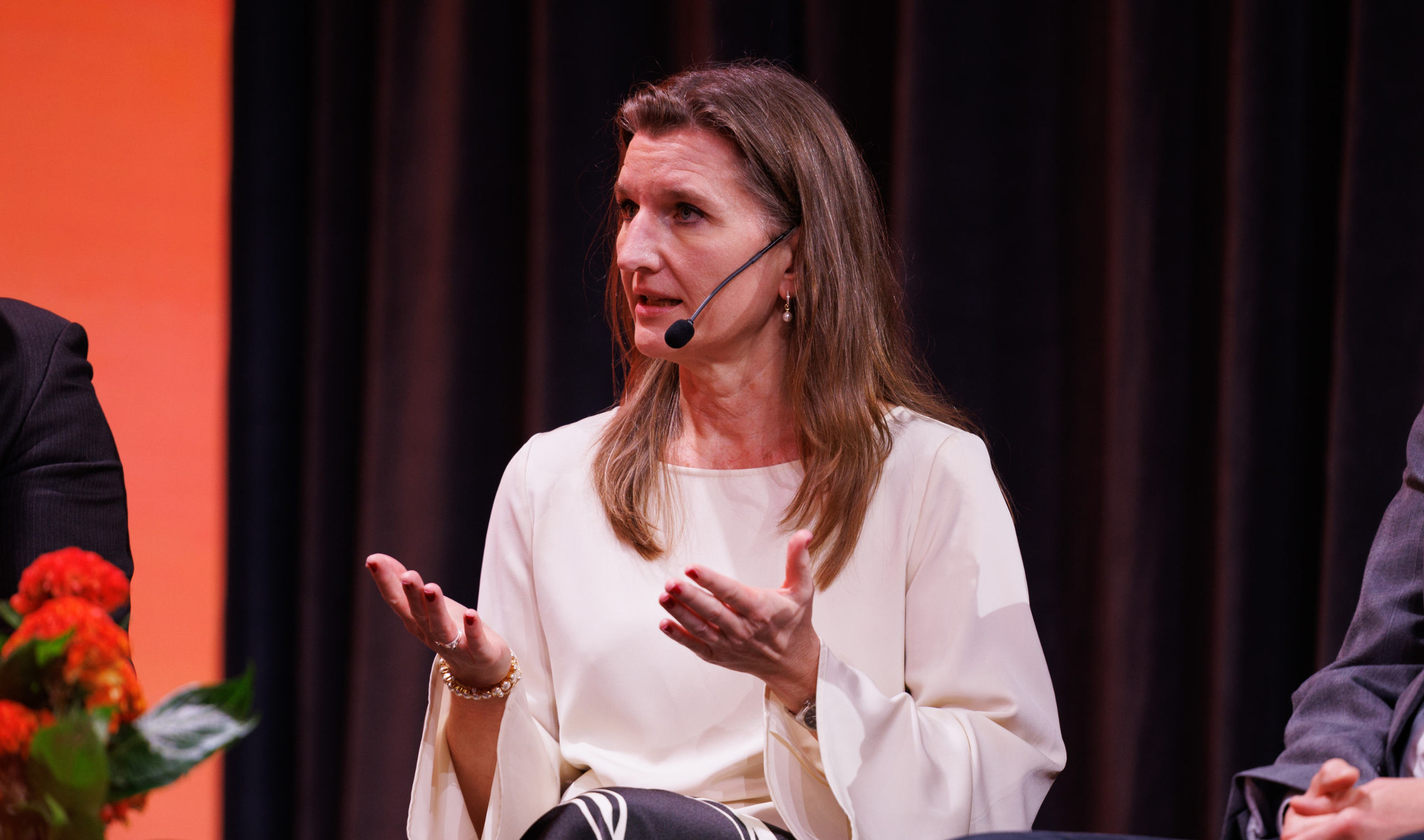
Interview with Petra Karmteg, Chair of Diversity Charter Sweden

Petra Karmteg i ett panelsamtal på scen.

”We have a more important role than ever.”

Culture - key to accessing everything managers and employees have to offer

Since 2023, Petra Karmteg, COO DNB Sweden, has been the Chair of Diversity Charter Sweden. Under her leadership, the network has made strategic changes to strengthen its influence and increase member benefit. Here, Petra shares her reflections on the successes achieved, the challenges ahead, and why the role of the network is more important than ever.

Three success factors for Diversity Charter Sweden

Diversity Charter Sweden: What have been the biggest successes so far during your presidency?

Petra Karmteg: - I would like to highlight three things in particular:

Clearer vision and strategy.
We did a lot of work at the beginning of my Presidency to ensure that our activities really help us achieve our vision.

Greater focus on member benefits.
In my first year, we conducted a membership survey which showed that our members needed more support to get more out of their membership. This led us to adjust our strategy, we now spend more time strengthening existing members and have slightly slowed down the pace of bringing in new ones.

Stronger voice in the public debate.
We have met with most political parties and our first opinion piece was published in the spring. We have now laid the foundations to become a bigger force in the discussion on diversity and inclusion in Sweden.

Global turbulence a risk for diversity work

Diversity Charter Sweden: What are the biggest challenges you see right now?

Petra Karmteg: - There is, of course, a risk that the turbulent external environment, such as the US administration's decision to drop the concept of DEI, may influence Swedish companies to back off in their diversity efforts. Fortunately, we are not yet seeing any clear signs of this - on the contrary, we are noticing some counter-reactions.

- But the greater the real impact on companies' balance sheets, the greater the risk that diversity efforts will be deprioritised.

Diversity Charter Sweden: How do you see Diversity Charter Sweden's role in driving diversity issues forward?

Petra Karmteg: - Given the challenges we face right now, we have a more important role than ever! With our link to the EU and our network of European Charters, we can truly be a counterweight to countries like the United States - and I think that will be extremely important going forward.

Diversity issues of the future

Diversity Charter Sweden: What do you think are the most important diversity issues to focus on in the future?

Petra Karmteg: - We will continue to work broadly and highlight all aspects of diversity. But we also need to focus even more on the external trends we see.

- AI is a particularly important issue. If companies around the world stop prioritising diversity work, it will affect how AI systems are trained. The risk is that the bias we see in humans today will be transferred to AI, and I hardly dare to think about what consequences that could have in the long run.

Diversity Charter Sweden

Diversity Charter Sweden has been a driving force for diversity and inclusion in the workplace for 16 years - and the work is more important than ever. With strong leaders and committed members, we can continue to make a difference, both in Sweden and internationally.

Diversity Charter Sweden 2010-2026, together we create change

Diversity Charter Sweden is one of the world's largest and official networks for diversity and inclusion at work, operating in all 27 EU countries.
Read previous publications

Två kvinnor i medelåldern med blont hår skrattar vända mot varandra, de bär kläder med Ahlsells logotyp. I bakgrunden produkter från Ahlsell.

Ahlsell lowered the barriers to health and well-being in the workplace

Ahlsell lowered the barriers to health and wellbeing in the workplace Member company: AhlsellTheme: mental health, work environment, inclusive leadershipTerm: 2024 - 2025 Background Mental health and wellbeing is a key employer issue. In Sweden, one in four employees report having experienced work-related health problems in the past year, and stress-related sick leave remains at high levels. This shows how closely issues of health, work environment, inclusion and sustainable working life are linked. For Ahlsell Sweden, the work with employees'

Read the full post »
Pensionärer firar på gatan. SPPs logotyp.

SPP challenged prejudices about pensions and older people at work

SPP challenged prejudices about pensions and older people in working life Member company: SPP Theme: ageism, inclusive communication, opinion-formingTerm: 2024 - 2025 Background SPP recognises that as we live longer, more people need to be given the opportunity to work longer - for the sake of the individual's finances, the sustainability of the pension system and the growth of society. At the same time, SPP recognises that many people are leaving working life earlier than they would like. Not because they lack the will or ability, but because they are excluded. Ageism costs Sweden SEK 11 billion

Read the full post »
En vit flagga med Cancerfondens blåa logotyp. I bakgrunden en byggnad.

The Cancer Foundation went from hard-to-reach information to inclusive communication that reaches more people

From inaccessible information to inclusive communication that reaches more people Member organisation: The Swedish Cancer SocietyTheme: language, health equity, inclusive communicationTerm: 2020 - 2025 Background The Swedish Cancer Society often says that one in three people get cancer, but that everyone is affected. Based on this insight, the organisation began to ask itself a key question: is the Swedish Cancer Society really an organisation for everyone? In early 2020, the Cancer Society's own analyses showed that the organisation was not reaching out sufficiently to several groups in society. Awareness and trust were lower

Read the full post »
Framsidan på Bilprovningens lokaler. En Husvagn är på väg att köra in.

For Bilprovningen, systematic gender equality work in a male-dominated industry has paid off

Systematic gender equality work in a male-dominated industry has paid off Member company: BilprovningenTheme: Gender equality, long-term approach, skills supplyTime period: 2007 - 2025 Background In 2007, only 2 per cent of the employees at Bilprovning's stations were women. At that time, Bilprovningen took a decisive step - a long-term and determined journey of change began with the aim of increasing diversity and gender equality. The conviction was clear: differences create a better working environment and increased job satisfaction. The Swedish MOT test centre has been working systematically on these issues for several years. An important

Read the full post »
Jysk flaggor mot en blå molning himmel.

For Jysk, paid language training led to broader recruitment, increased inclusion and safer work

Language training during paid working hours led to broader recruitment, increased inclusion and safer work Member company: JYSK Sweden - Distribution Centre in NässjöTopic: Language, inclusion and skills supplyTime period: 2017 - today Background In 2015, Sweden had a historically high refugee intake. In Nässjö, JYSK chose to take an active responsibility, in collaboration with other industrial actors and Nässjö Lärcenter. By offering internships at its distribution centre to people who have studied Swedish for Immigrants (SFI), JYSK wanted to give new arrivals a concrete opportunity

Read the full post »
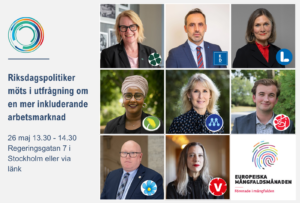
Politikerutfrågning. Bild och logga på alla deltagare.

MPs meet in hearing on a more inclusive labour market

On 26 May, Diversity Charter Sweden will bring together representatives from the parliamentary parties for a policy hearing on the labour market, inclusion and skills supply. The hearing is based on a central societal challenge: while many employers have difficulty finding the right skills, many people are outside the labour market.

Read the full post »