Employees and managers are an important asset in the workplace - that's why workplaces need to continuously invest in their culture. I meet workplaces where the wheels are turning at full speed and where people say they simply don't have time to work on their workplace culture. I also meet workplaces that have had, or are facing, downsizing, where they say that in this situation they cannot prioritise working on their culture. In both cases, this is a misconception.
Culture - key to accessing everything managers and employees have to offer
Epidemic of silence
In the book ”The fearless organisation - psychological safety at work” summarises Professor Amy Edmondson: there is an epidemic of silence in our workplaces. In many workplaces, employees choose not to speak up, even when they think their point of view is important to the organisation. This can include not raising issues, mistakes and errors, or not asking questions, but also not sharing ideas, suggestions for improvement, experiences and knowledge.
Why are employees silent? A common reason is that speaking up is perceived as a risk. A risk of being penalised, ignored or ridiculed by colleagues, or of appearing ignorant, negative or ”making trouble” (for example with suggestions for improvement). So to protect yourself, you keep quiet.
What do we risk losing?
Silence on the part of employees and managers is a major loss of information for the workplace. This is why it is important to ”invest” in workplace culture. Spending time and resources on developing an inclusive culture with psychological safety. And this regardless of whether the business is currently doing well or if times are tough.
Continuously working on, developing, and reinforcing your workplace culture is crucial to fully utilise the knowledge, experience, and perspectives of your managers and employees, and to manage your business well. It is also crucial when it comes to developments and technological changes in the workplace, such as AI initiatives. If it is safe to try, question, learn and develop, it provides good conditions for success. On the other hand, silence, uncertainty and fear that are not addressed increase the risk that your AI initiative will not reach its full potential.
What is psychological safety?
Psychological safety is feeling safe to take ”interpersonal risks” in the work group. This can include admitting mistakes, raising issues, asking questions, making suggestions and sharing knowledge without fear of being ridiculed or excluded, for example.
In psychologically safe groups, it is easy to speak your mind, easy to ask others for help, share information, talk about what works well and what doesn't, and recognise the unique skills and abilities of others. They are able to raise problems and difficult issues and do not stigmatise colleagues who make mistakes.
Research shows that:
- Groups with psychological safety perform better and are more innovative than groups without psychological safety.
- Groups with psychological safety are more engaged and more focused on learning and quality development.
Psychological safety is an important foundation for an inclusive culture, where differences are welcomed and different perspectives, experiences and knowledge are utilised.
How can you work on your workplace culture?
What can ”working with culture” be? If you're a manager, it's important that in your conversations with employees you regularly return to
what culture you want to have in your organisation, and of course behaving accordingly. This can include, for example, clearly inviting perspectives and showing appreciation for the contributions of others.
It could also involve spending 30 minutes once a month discussing (preferably first in small groups and then together) different aspects of your culture.
It can be to talk about:
- How much do we share: problems and challenges in our workplace? Opportunities and suggestions for improvement?
- Is there anything we can do differently to ensure that all colleagues share?
- Which of the behaviours that promote psychological safety do we do well in our work group? Which of the behaviours can we improve or do more of?
It can also be to go through policy documents that describe what the culture should be like in your organisation, or to review your harassment and victimisation procedures and discuss them.
But the real ”work” on your workplace culture is done on a day-to-day basis, in terms of how you behave towards each other, how you speak to and about each other, how you interpret and treat each other, and so on.
What is it like in your workplace? What are you doing in your workplace to invest in workplace culture?
Research, books and posts on which the text is based
- Edmondson, A.C. (2019). The Fearless Organisation: Creating Psychological Safety in the Workplace for Learning, Innovation, and Growth. Hoboken, NJ: Wiley. Swedish edition: The Fearless Organisation - psychological safety at work. Stockholm: Sanoma Utbildning.
- Edmondson, A.C., & Hugander, P. (2021). 4 Steps to Boost Psychological Safety at Your Workplace. Harvard Business Review, 22 June.
- Edmondson, A.C., & Hugander, P. (2021). Psychological Safety Is Not a Hygiene Factor. Psychology Today, 7 September.
- Rydgren, E. (2026, January). LinkedIn post about

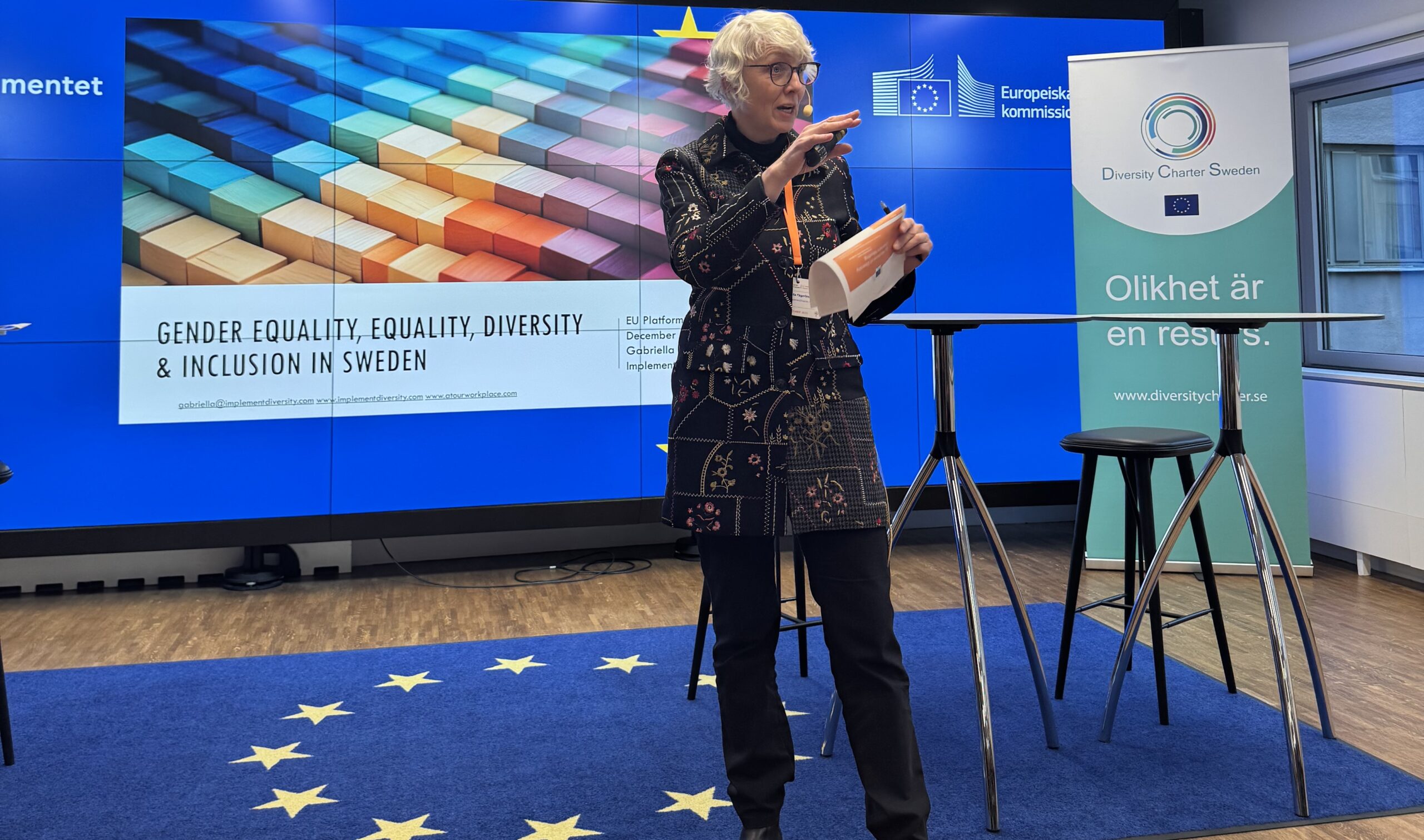
Gabriella Fägerlind
Gabriella is a senior expert in diversity, inclusion and equality at Diversity Charter Sweden.