Interview with Petra Karmteg, Chair of Diversity Charter Sweden

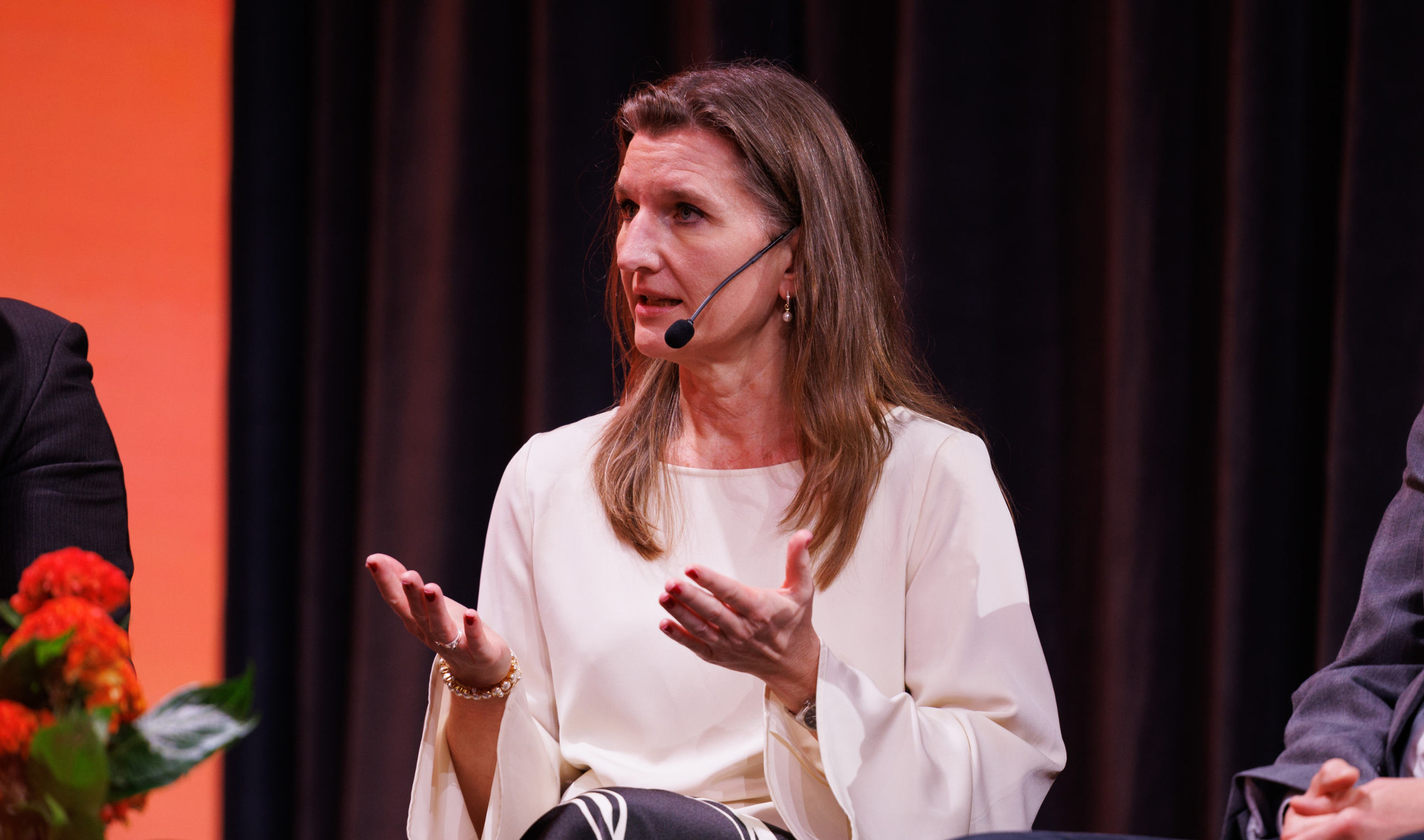
Petra Karmteg i ett panelsamtal på scen.

”We have a more important role than ever.”

Culture - key to accessing everything managers and employees have to offer

Since 2023, Petra Karmteg, COO DNB Sweden, has been the Chair of Diversity Charter Sweden. Under her leadership, the network has made strategic changes to strengthen its influence and increase member benefit. Here, Petra shares her reflections on the successes achieved, the challenges ahead, and why the role of the network is more important than ever.

Three success factors for Diversity Charter Sweden

Diversity Charter Sweden: What have been the biggest successes so far during your presidency?

Petra Karmteg: - I would like to highlight three things in particular:

Clearer vision and strategy.
We did a lot of work at the beginning of my Presidency to ensure that our activities really help us achieve our vision.

Greater focus on member benefits.
In my first year, we conducted a membership survey which showed that our members needed more support to get more out of their membership. This led us to adjust our strategy, we now spend more time strengthening existing members and have slightly slowed down the pace of bringing in new ones.

Stronger voice in the public debate.
We have met with most political parties and our first opinion piece was published in the spring. We have now laid the foundations to become a bigger force in the discussion on diversity and inclusion in Sweden.

Global turbulence a risk for diversity work

Diversity Charter Sweden: What are the biggest challenges you see right now?

Petra Karmteg: - There is, of course, a risk that the turbulent external environment, such as the US administration's decision to drop the concept of DEI, may influence Swedish companies to back off in their diversity efforts. Fortunately, we are not yet seeing any clear signs of this - on the contrary, we are noticing some counter-reactions.

- But the greater the real impact on companies' balance sheets, the greater the risk that diversity efforts will be deprioritised.

Diversity Charter Sweden: How do you see Diversity Charter Sweden's role in driving diversity issues forward?

Petra Karmteg: - Given the challenges we face right now, we have a more important role than ever! With our link to the EU and our network of European Charters, we can truly be a counterweight to countries like the United States - and I think that will be extremely important going forward.

Diversity issues of the future

Diversity Charter Sweden: What do you think are the most important diversity issues to focus on in the future?

Petra Karmteg: - We will continue to work broadly and highlight all aspects of diversity. But we also need to focus even more on the external trends we see.

- AI is a particularly important issue. If companies around the world stop prioritising diversity work, it will affect how AI systems are trained. The risk is that the bias we see in humans today will be transferred to AI, and I hardly dare to think about what consequences that could have in the long run.

Diversity Charter Sweden

Diversity Charter Sweden has been a driving force for diversity and inclusion in the workplace for 16 years - and the work is more important than ever. With strong leaders and committed members, we can continue to make a difference, both in Sweden and internationally.

Diversity Charter Sweden 2010-2026, together we create change

Diversity Charter Sweden is one of the world's largest and official networks for diversity and inclusion at work, operating in all 27 EU countries.
Read previous publications

Representatives from european charters

Gender Equality at Work in Europe: Perspectives from the Diversity Charters

According to the EU Gender Equality Index 2025, progress towards gender equality across the EU remains uneven, with an overall score of 63.4 out of 100. Ahead of International Women's Day, Diversity Charter Sweden invited Diversity Charters across Europe to share their reflections on how gender equality in the workplace is developing in their respective countries. Summary of National Perspectives Diversity Charter Malta Julian Dingli,

Read the full post »
Kvinna med svarta kläder och grått hår håller i ett föredrag.

Scouting: Risky not to invest in workplace culture

Employees and managers are an important asset in the workplace - that's why workplaces need to continuously invest in their culture. I meet workplaces where the wheels are turning at full speed and where people say they simply don't have time to work on their workplace culture. I also meet workplaces that have had, or are facing, downsizing, where they say that in this situation they cannot prioritise working on their culture. In both cases, this is a

Read the full post »
Kvinna med svarta kläder och grått hår håller i ett föredrag.

Risky not to invest in workplace culture

Employees and managers are an important asset in the workplace - that's why workplaces need to continuously invest in their culture. I meet workplaces where the wheels are turning at full speed and where people say they simply don't have time to work on their workplace culture. I also meet workplaces that have had, or are facing, downsizing, where they say that in this situation they cannot prioritise working on their culture. In both cases, this is a

Read the full post »
Kvinna mer grått hår pekar på en skärm. På golvet ligger en matta med EUs flagga.

How to ensure diversity, equality and inclusion - even in tough times 

Around 130 nominations with initiatives for diversity, equality and inclusion were submitted by your members to the Diversity Charter Sweden Awards 2025! A fantastic example of the commitment that exists. At the same time, there are worrying signals: some are scaling back DEI work in tough times. In industries that are currently experiencing downsizing, some workplaces are choosing to de-prioritise work on diversity, equality and inclusion. This may mean that training initiatives and development work are paused or cancelled, that posts with specific responsibilities

Read the full post »
Porträtt av en man med glasögon och svart hår, iförd slips, där bilden är beskuren vid hans axlar.

”We created an opportunity that would not have existed otherwise”

Get to know our members As Vice President Energy Trading at Stockholm Exergi, Shamsher Khan has worked for many years in environments where strategic decisions, complex issues and long-term leadership are a natural part of everyday life. When he chose to join Diversity Charter Sweden's board, he wanted to bring those experiences with him, but also his desire to contribute to something bigger than his own organisation. Why he chose to join the board Before Shamsher joined

Read the full post »
På bild ser man åtta personer som står bakom ett bord. Alla ler mot kameran och viftar på händerna. Bakom syns en skärm med Diversity Charters logga, som är en rund ring med olika färger.

Friday Learning - Pay Transparency Directive

This conversation was recorded on November 28, 2025, as part of Fredagskunskapen - our knowledge series on diversity and inclusion. The new rules under the Pay Transparency Directive (EU Directive 2023/970) come into effect in June 2026. What does this mean for you as an employer? What is the purpose and the benefits of the rules? Which employers are affected? And what is important to start preparing for today? Speakers: Moderator: Nicole Williams - Senior Change Manager; Digitalisation,

Read the full post »