
Many workplaces are still designed around a rather narrow view of how we function, communicate and organise work. For people with ADHD or autism, this can mean that barriers arise in their day-to-day work - barriers that are not about skills, but about how work is structured, managed and monitored.
There is a risk that skills are not fully utilised, with consequences for the work environment, performance and skills supply. At the same time, research shows that many people perform at least as well as others when the conditions are right.
The Swedish Work Environment Authority's new guidelines focus on just that: how employers can create better conditions by developing the work environment, rather than trying to customise the individual
To whom do the new guidelines of the Swedish Work Environment Authority apply?
The guidelines are aimed at occupational health services and focus on health promotion and work adaptations. They support employers, workplaces and work groups with employees with autism or ADHD with preventive and promotional measures.
With the right conditions, more people can contribute fully
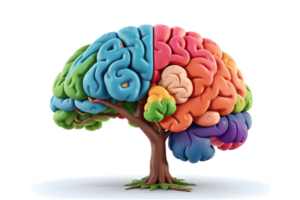
Neurodiversity - brains work in different ways
Neurodiversity describes the neurological diversity that exists in society - that our brains function and work in different ways. It is sometimes referred to as neurotypical - which is the most common - and neurodivergent, which includes, for example, people with ADHD or autism. Neurodivergent people may experience and interact with both the physical and social work environment differently from what is considered typical.
An uneven skills profile is also common. A person may be highly skilled in some areas that are central to the job, while other areas, often taken for granted, may present greater challenges.
The Swedish Work Environment Authority highlights research that shows that people with ADHD and autism often face particular challenges in working life, such as increased risk of ill health, sick leave and insecure forms of employment. However, given the right conditions, many can contribute their perspectives and competences, just like their colleagues.
Common misconceptions about ADHD, autism and working life
- That it is a one-way problem and is only about the individual's ability. It is often about the interaction between the individual, how the work is organised and what conditions exist.
- That it always requires large resources. Many adaptations are simple and can make a big difference.
- That it only applies to certain roles or industries. People with ADHD and autism are found in all types of professions and organisations.
A clearer focus on the interaction between the individual and the work environment
The perception of work ability
Rather than focusing solely on the individual's difficulties, the guidelines emphasise the interaction between the individual and the work environment. How work is organised, managed and followed up is crucial to whether employees can function and contribute fully.
Focus on prevention and health promotion
The emphasis is on prevention rather than just taking action when problems have already occurred. This means that issues of structure, clarity and work environment need to be part of the ongoing work.
Multi-level interventions
At the same time, it makes clear that action needs to be taken at several levels: in the organisation as a whole, in the work group and in individual support for employees.
What do the guidelines mean in practice for employers?
The Swedish Work Environment Authority's new guidelines do not entail any completely new responsibilities for employers, but they do clarify how these responsibilities can be put into practice. Many initiatives are about creating clarity, structure and a work environment that works for different ways of thinking and working. For example, it can be about:
In the work environment:
- the ability to work undisturbed or switch between focus and collaboration
- customisation of sound, light and workspace
- access to recovery, breaks and flexibility in working practices
In the organisation of the work:
- clear tasks, priorities and objectives
- structure of the working day and support for planning and time management
- adjustment of workload or pace if necessary
In leadership and co-operation:
- clear and predictable communication
- regular monitoring and dialogue
- a work environment where employees dare to ask questions and ask for support
At its core, it's about things that strengthen the workplace for everyone: clarity, trust, effective communication and psychological safety. Many of these interventions are relatively simple to implement, but can contribute to a better working environment, lower sickness absence and more sustainable performance over time.
How to get started
Developing a more inclusive work environment does not have to start with big changes. A first step can be to:
- review how work is organised and communicated
- involve managers in creating clarity and structure in everyday life
- identify where minor adjustments can make a difference
Small changes in the way work is organised can create better conditions for more people to contribute - and at the same time strengthen the business as a whole.
Learn more about autism and ADHD at work
The Swedish Work Environment Authority Guidelines on autism or adhd in the workplace - health promotion and work adaptations
Smith, T., Kirby, A. (2022) Neurodiversity at Work - Drive Innovation, Performance and Productivity with a Neurodiverse Workforce. Kogan Page Ltd.
Borg Skoglund, L., Nelson, M. (2022) ADHD at work: research, the brain and strategies. Nature & Culture.
An article here in the Knowledge Bank on autism and ADHD in the workplace.