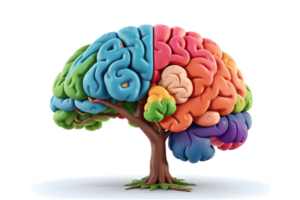
In many industries, the tough times of downsizing and uncertainty about how the business will develop unfortunately continue. Uncertainty, anxiety and time pressure are some of the things that increase the risk of going on autopilot and letting unconscious biases, so-called "unconscious bias", take over. unconscious bias govern how we treat and assess, for example, colleagues, job applicants and customers/residents/patients. This can have negative effects in an already pressurised situation, for example in terms of how work teams function and perform.
Different experiences, perspectives and knowledge are an advantage in the work of many groups and it is also usually emphasised as an advantage in groups with diversity. But it is important that we have accurate information about who has what skills and experience.
Diversity is about both demographic differences (such as gender, ethnicity, background, disabilities and age) and cognitive differences (such as education, experiences, perspectives and networks). Our unconscious beliefs (so-called. unconscious bias), such as demographic differences, can hinder the recognition, understanding and utilisation of skills. Perceptions about occupations and functions in the workplace, or judgements about people can also have the same effect.
Research shows that it is easy to jump to conclusions about colleagues” qualifications based on very little information, and that this can lead to individuals and groups underperforming. This may involve over- or under-estimating someone's skills and experience based on, for example, gender, ethnic background, age or status/how dominant they are. Studies have shown that in groups this has led to knowledgeable individuals not being listened to and their views not being heard in discussions, and instead the group has listened to and affirmed, encouraging the ”wrong' people who did not have sufficient skills or experience. And this, in turn, has had a negative impact on the group's performance.
Research has also shown that preconceptions, such as stereotypes about someone's qualifications based on gender or age, can be difficult to change unless we engage, i.e. take the time, interact, actively listen and ”take it in”. How can we do this?
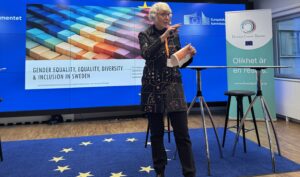
I gave a presentation on inclusive leadership at a management conference last autumn, and one of the managers suggested a new routine: When a new colleague joins the work group, everyone, both the new colleague and the ”old” group members, tells about their CV. The manager emphasised that this way the team gets to know the new colleague not only socially, but also in terms of competences, and the new colleague gets to know his/her new colleagues faster. In addition, all team members get updated information about their colleagues' competences. The manager's CV presentation suggestion is a great way for us to get actual knowledge about our colleagues' competences.
What more can we do? Make it clear that, in meetings and in other contexts, different viewpoints and approaches are welcome. That everyone is involved and shares information and knowledge. And that we work to ensure that everyone is allowed, able and willing to speak. That we as colleagues encourage each other to share our experiences. Actively listening to each other in discussions and ”responding” to the thoughts, perspectives and ideas shared. Ensuring that we have a safe climate, where colleagues dare to share thoughts, perspectives and problems. It is also about who we invite to meetings, how we staff working and project groups and who we recruit.
So even if we are under pressure at work, it is smart to provide good conditions for employees and managers to have accurate information about each other's skills and experiences, as this in turn provides better conditions for utilising all the skills and potential that exist in your workplace, both in individuals and in work groups.
The research I refer to in the text:
Meyer, B., van Dijk, H., & van Engen, M. (2022) (Mitigating) the self-fulfillment of gender stereotypes in teams: the interplay of competence attributions, behavioural dominance, individual performance, and diversity beliefs. The Journal of applied psychology, 107(11), 1907-1925.
van Dijk, H. (2025) “Comparing Oranges with Oranges: A Classroom Exercise to Bust the Myth That Stereotypes Wane Over Time” in O. Holmes IV (ed.), Championing Diversity, Equity, and Inclusion, Volume 2, Palgrave Studies in Equity, Diversity, Inclusion, and Indigenisation in Business. Springer Nature Switzerland. https:// doi.org/10.1007/978-3-031-89384-1_3
van Dijk H, Meyer B, van Engen M (2018) “If it doesn't help, it doesn't hurt? Information elaboration harms the performance of gender diverse teams when attributions of competence are inaccurate.” PLoS ONE 13(7): e0201180. https:// doi.org/10.1371/journal.pone.0201180
Gabriella Fägerlind has worked as an organisational consultant focusing on gender equality, diversity and inclusion in the workplace since 1999. She is the author of the book ”Mångfald i praktiken - handbok för inkluderande arbetsplatser”, which was published in 2024.